

This best-practice article examines the implementation of nectar LMS in a global technology company, introduced to complement classroom-based training and ensure consistent technical knowledge across locations and time zones. Rather than being driven by innovation, the partnership with nectar LMS emerged from operational necessity and developed into a central infrastructure for learning, organisation, and compliance. The project demonstrates that sustainable LMS success depends less on technical features and more on practical usability, rapid deployment, clear communication, and relevant content.
Key success factors included early alignment of expectations, close collaboration between IT, HR, specialist departments and external partners, intensive pre–go-live testing, and low entry barriers for users. Measurable benefits comprised reduced administrative effort, improved transparency, reliable documentation of mandatory training, and significant time savings through automation. Overall, the case shows that an LMS delivers organisational value when it integrates seamlessly into daily work practices and prioritises simplicity and stability over feature complexity.


The introduction of nectar LMS was not driven by a desire for innovation, but by clear operational necessity: classroom-based training alone was no longer sufficient to deliver technical knowledge consistently and promptly on a global scale. The goal was to establish digital learning offerings as a complement to existing in-person formats, ensuring a consistent level of knowledge among technicians regardless of location or time.
From the outset, it was clear that an LMS could not be treated as an isolated IT project but needed to become a central tool for blended learning activities across the entire organisation.
The expectations of nectar LMS were clearly defined:
nectar LMS was therefore required to meet both operational and regulatory requirements.
This objective aligns with research on the strategic role of corporate learning. Kerres describes digital learning systems as infrastructure that “does not primarily transport content but enables and stabilises organisational learning processes” (Kerres, 2018). An LMS is therefore less a learning medium and more an organisational enabler.
Illeris likewise points out that learning in organisational contexts is always linked to work requirements and only becomes sustainable when it is “experienced as a functional part of professional practice” (Illeris, 2018).
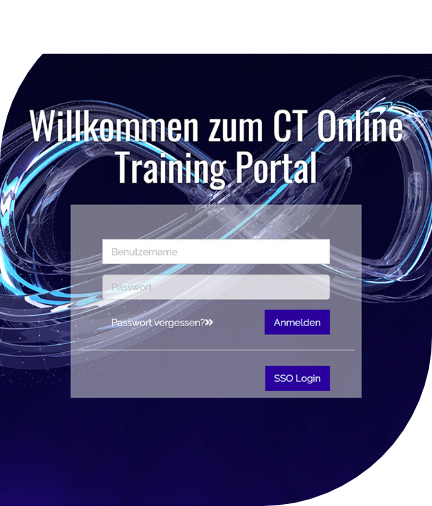

Overall, the nectar LMS implementation was highly successful. A key success factor was the rapid availability of a system ready for productive use. Instead of lengthy training and conceptual phases, the LMS was deployed quickly, while requiring only minimal training for administrators.
Open and transparent communication also had a particularly positive impact. It contributed significantly to building acceptance and managing expectations at an early stage. One of the central challenges was creating a shared understanding among all stakeholders of the system’s functions and capabilities.
Collaboration between IT, HR, specialist departments and external partners was consistently rated as very good — an important factor in the implementation of organisation-wide systems.
After an initially cautious start, nectar LMS developed into a steadily growing learning portal with both internal and external user groups. English-speaking technicians were reached particularly well, while language barriers presented challenges for other target groups.
What drove increasing acceptance was less the range of features and more the availability of relevant content, combined with open communication about the system’s benefits and use cases.
One participant summarised this experience succinctly:
“It’s not the most powerful LMS that succeeds, but the one that works in everyday practice.”
(LMS Manager)
This outcome is supported by classical acceptance models. In the Technology Acceptance Model (TAM), Davis shows that perceived ease of use and perceived usefulness are the key drivers of digital system adoption (Davis, 1989).
A central practical learning therefore is:
Ease of use is more important than an extensive feature set.


nectar LMS led to significant improvements across several areas:
Automated report generation replaced previously time-consuming manual processes. Many of these improvements would have required substantial additional effort — or would not have been achievable at all — without an LMS.
In daily operation, nectar LMS proved to be highly stable. Integration into the existing system landscape — particularly through user-friendly single sign-on — contributed significantly to acceptance.
Potential risks relating to GDPR, hosting or role and permission models were addressed early and did not present any material issues during ongoing operations.

From the perspective of those responsible, the benefits of the LMS clearly outweigh the costs. Core processes — particularly around mandatory training and documentation — would not be manageable without an LMS.
At the same time, optimisation potential was identified, especially through:
Looking back, several clear learnings emerged:
A particularly effective best practice was thoroughly testing all system functions in a test environment before going live.


From the project team’s perspective, the following factors were decisive:
In hindsight, the core thread of the project can be distilled into a simple insight:
“The true measure of an LMS is not its feature catalogue, but how well it is used in everyday work.”
(LMS Manager)
Senge describes learning organisations as systems that continuously adapt their structures rather than adhering to predefined concepts:
“Learning organizations are not built by design alone, but by continuous reflection and adjustment” (Senge, 2006).
From a motivational psychology perspective, this approach is equally sound. Deci and Ryan emphasise that learning becomes sustainable when autonomy and competence are experienced (Deci & Ryan, 2000).
In summary, an LMS delivers value when it simplifies processes rather than complicating them — and when learning is integrated in a way that makes it a natural part of daily work.

References (Selection)

A learning management system
by Fischer, Knoblauch & Co.
Developed and operated in Germany
Fischer, Knoblauch & Co.
Munich, Germany
+49 89 95 84 34 - 0